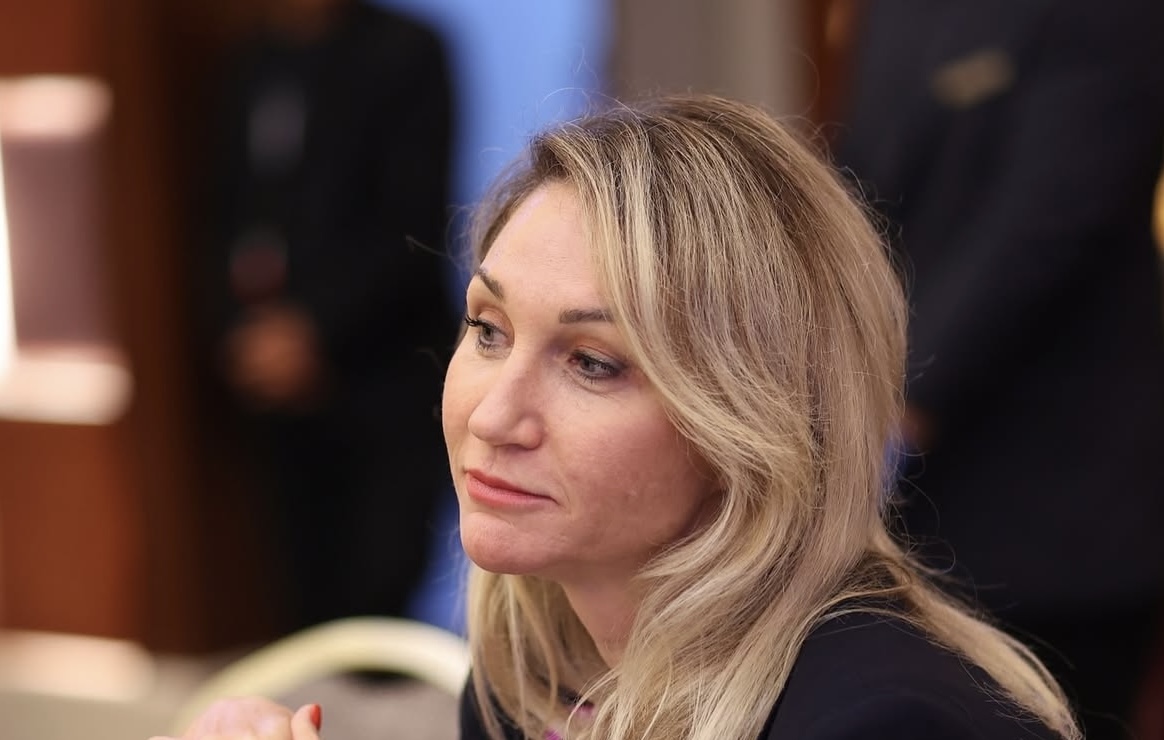
“For me, the transition out of elite sport wasn’t just a career change. It was a complete life reconstruction.
I didn’t simply move from one professional chapter to another. I moved countries. First to Germany, then to England to study. New environment, new culture, new language — in my case, German, which I committed to learning properly because I had married a German man and understood what that meant for where my life was headed. I wasn’t just changing jobs. I was rebuilding everything around me at the same time.
And the most important factor in all of it — I’ll say this without any hesitation — was my husband. His support wasn’t passive. When I told him I wanted to study in London or later in Lausanne, he said yes. We commuted between countries for a period, which wasn’t easy, but we both understood it as an investment: in my education, in my English, in my future professional credibility. Having a partner who believes in your reinvention before you fully believe in it yourself is something I don’t take for granted. Not every athlete has that. If you do, protect it and acknowledge it. If you don’t, build that support system consciously — through mentors, through communities, through people who have made the transition before you.
The second thing that saved me was education. I’ve said it already in the context of finances, and I’ll say it again here: it was the best investment I made. It gave me structure during a disorienting period, it gave me language — literally and professionally — to operate in new environments, and it gave me credentials that meant people took me seriously in rooms where nobody knew my volleyball career.
But even with all of that preparation, the real lessons came in the small humbling moments.
My first job was at the IOC. Two Olympic silver medals, years of elite international competition, a new degree. And on one of my early days, a colleague asked me to make a recto verso copy of a document — colour, A3 format. I stood in front of that printer and had absolutely no idea what to do. I had to ask a colleague for help.
I remember the flash of shame. I am a two-time Olympic silver medallist and I cannot operate this machine. But then something shifted. I thought: I don’t know how to do this today. Tomorrow I will. That’s it. That’s the whole lesson.
From that moment, I decided to approach the transition with deliberate humility. Not the false humility of someone performing modesty, but the real kind — the willingness to be a beginner, to ask the question, to look slightly foolish in the short term in order to learn faster. It is, I think, the single most underrated skill an elite athlete can develop when they leave sport. We are trained to project confidence and competence at all times. The transition requires the opposite: the courage to not know, and the curiosity to find out.
So if I had to distill the transition into a few principles:
- Let the people who love you help you
- Don’t perform independence during the hardest period of your professional life
- Invest in education early — before you retire if possible. It compounds faster than almost anything else.
Build your personal brand around your next identity, not your last one. You were an athlete. Now you are someone who was an athlete and is becoming something else. The world is interested in both — but only if you lead them forward.
Be willing to not know things. The printer moment will come for every athlete. How you respond to it will define the next chapter more than any medal ever could”.
Follow all MCSC Group news on our official LinkedIn and Instagram.