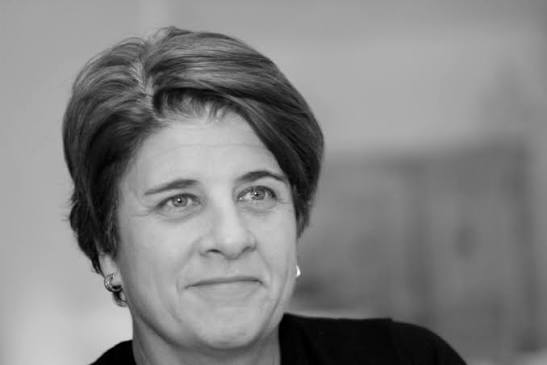
For more than three decades, psychologist Isabelle Inchauspé has worked alongside Olympic champions, elite athletes and business leaders, helping them understand the mental foundations of high performance. Throughout her career, she has observed that success is rarely determined by talent alone. Instead, it is shaped by purpose, discipline and the ability to focus on performance rather than outcomes.
In this interview, Isabelle shares her perspective on what sport and business have in common, why intrinsic motivation is the strongest driver of excellence, and how individuals can cultivate a mindset capable of sustaining performance over the long term.
— Isabelle, for more than thirty years you’ve worked with Olympic champions, elite athletes, and business leaders. What have these experiences taught you about the psychology of high performance?
— These experiences, both in sport and in business, first taught me that they share common ground. The first thing they have in common — and no one escapes this — is that reaching a high level demands a great deal of work and sacrifice. So before anything else, it’s about effort. The second common point is that operating at a high level also brings enormous pleasure. And the third is that for people performing at a high level, what matters most is the notion of performance rather than the notion of results. The result is a consequence of your performance — of the quality you put into your actions.
— You often explain that performance begins with desire. Why is intrinsic motivation more powerful than external pressure?
— Intrinsic motivation is simply the ability to give meaning to what you do. That meaning gives us energy, strength, the capacity to push beyond ourselves to reach the performance we want to achieve. It’s the only source we fully control and can direct as we wish. Extrinsic motivation is far less powerful because it makes us dependent on external factors and doesn’t necessarily connect to the meaning of our efforts.
— Many people associate elite sport with discipline. In your view, what role do pleasure and curiosity play in sustainable performance?
— Pleasure plays a crucial role in being able to keep making the effort that top-level performance requires, continuously. Unless you’re a complete masochist, it’s very hard to make an effort that doesn’t bring you a corresponding dose of pleasure. So it’s very important, as I said earlier, to identify why you’re pursuing high performance — that identifies the meaning of the effort and, above all, the source of your pleasure.
As for curiosity, it becomes a formidable tool for continuing over time to find the means, resources, people, and ideas around you that will nourish you enough to withstand the demands of that level. Curiosity is essential to performance, and we find it in every person, in sport as in business, who has achieved exceptional performance.
— Mental preparation is now widely recognized in elite sport. Do you think the business world still underestimates its importance?
— The business world underestimates it less and less. We’re actually seeing the rise of corporate coaching. What business leaders or executives sometimes underestimate is the impact of this work on performance. In sport, performance is often immediate; in business, it often takes longer. This sometimes means that within companies, people struggle to project this work over the long term.
— You’ve worked with athletes from very different disciplines. Are there psychological traits common to all great performers?
— Yes, I’d say without hesitation that there are common points among every personality who performs at a high level in sport. I’d say the same for business, based on my experience.
This question could really summarize the previous ones. Indeed, there are common traits among everyone who performs at a very high level, whatever the discipline.
They are people who know themselves extremely well and who have had the curiosity to discover themselves. They are also people with a strongly marked sense of courage. They’re capable of confronting who they are — their strengths and flaws — and who they want to become, with all the effort that requires. These high-level personalities are also characterized by their ability to imagine their own evolution. That imagination allows them to keep reinventing themselves and never rest on what they’ve already achieved.
And I’ll end with a point that might make you smile: all these high-level personalities share the trait of not being easy to manage, because they’re always in motion, always curious, always reaching further. So they can be quite exhausting for those around them.
— Athletes spend years preparing for competition, but often very little time preparing for life after their career. Why is this transition so psychologically difficult?
— That’s a very important question indeed. They struggle to think about life after their career because the intensity of the emotions, the intensity of the moments they experience through sport, is such that it’s hard to imagine it will one day end. Grieving what you experience in sport is never easy. So they often postpone that moment and think about the rest of their life too late.
In my view, what matters in a high-level athlete’s career transition is finding, in whatever they do next, strong emotions that come close to what they found in sport. And that’s always quite hard to find in a so-called “normal” career.
— At MCSC Group, we believe athletes should prepare their professional future during their sporting career. Do you share this view from a psychological standpoint?
— Yes, I share that view, but the challenge is finding space in the athlete’s mind to think about their post-career while they’re living something so intense in their current career. And that will be the whole challenge in working with high-level athletes.
— How can an athlete build an identity that goes beyond results, medals, or rankings?
— That’s a dimension that’s difficult to reach, and perhaps the only real goal for a high-level athlete. Having an identity in elite sport means expressing yourself fully, daring to set aside the notion of results. That’s very complicated in our society, where the first questions and the first feedback focus on results — just like grades at school. For that identity to be built, it’s essential that the high-level athlete has a very clear understanding of why they’re committing to this path. It’s long-term work, and the clearer and better it’s done, the stronger the consequences on results will be — without even thinking about the result itself.
— You also work with executives and leadership teams. What similarities do you see between a business leader and an elite athlete?
— The main similarities lie in their ability to know themselves well, to dare think in terms of progress rather than results (results being a consequence of progress), and in making great use of curiosity to dare venture into the unknown, as well as the value of courage in making decisions.
— Failure is part of both sport and business. What sets apart people who bounce back quickly from those who struggle to recover?
— This comes back to what we’ve been saying from the start: failure is handled well as long as what you’re seeking, in sport as in business, is to move forward, to get to know yourself, to discover, to live exceptional moments — not to hit a result or a revenue figure. Failure is actually handled very well if what you’re seeking in your life and career is to live moments, not to produce a result. That’s often where the difference lies between the elite level and the rest of the world.
— Social media now exposes athletes to constant pressure. Has this shift changed how you approach mental preparation?
— Surprisingly, the rise of social media hasn’t changed how I approach things. Today, the athletes and even the business leaders I work with have fully integrated this dimension. It’s not a problem for them today. Of course, that’s because they’re very good at distinguishing between what’s on social media and reality. That may be specific to the people I work with, and may not be true for everyone.
— How can parents, coaches, and advisors support young athletes without creating excessive pressure?
— That’s a key question, and I’d answer with a simple idea: it’s important for those around the athlete to focus on what the athlete wants to experience in terms of emotion, progress, self-discovery, pushing their limits — not on results. The notion of living something is far more important than the notion of achieving something. Living the performance is always rich in exchange and shared progress. Chasing the result is always a source of frustration, fear, and often conflict.
— If you could change just one aspect of how high-level athletes are supported today, what would it be?
— Very clearly, I’d want to change how coaches and trainers are trained. Often they’re people who haven’t received training in how human beings function in general. So they end up managing situations without understanding them, which leads to many errors in analysis and, consequently, in resolution.
— In your view, what role should trusted advisors — legal, financial, or psychological — play in helping athletes build a sustainable career?
— I’d say that everyone around an athlete has a role to play, whatever it may be. Whether it’s a team sport or an individual one, an athlete is surrounded by a staff, a family, friends — all of whom have an impact on their career and their life. So it’s very important for the athlete to know exactly what they want, in order to make choices about who surrounds them, which are sometimes difficult choices. And it’s just as important for those around them to understand the demands of a high-level athlete — and this could extend to business as well — in order to find a helpful place alongside them.
— Finally, what’s your definition of long-term success? Is it simply winning, or is it something much deeper?
— I’d say that winning is not really what defines long-term success. Winning is above all a consequence of long-term success. For me, long-term success is when an athlete, a business leader — and it’s the same for everyone, really — has the capacity to live out the best they could imagine for themselves. It’s the alignment between who you want to be and how you want to live, and what you actually live and truly love. That, to me, is long-term success.