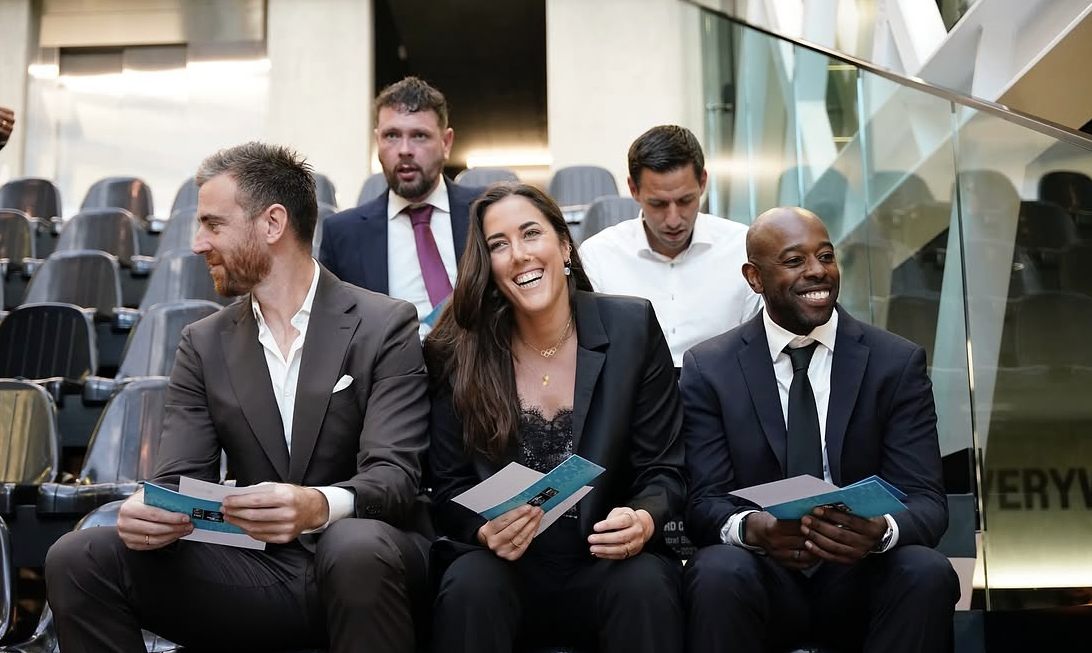
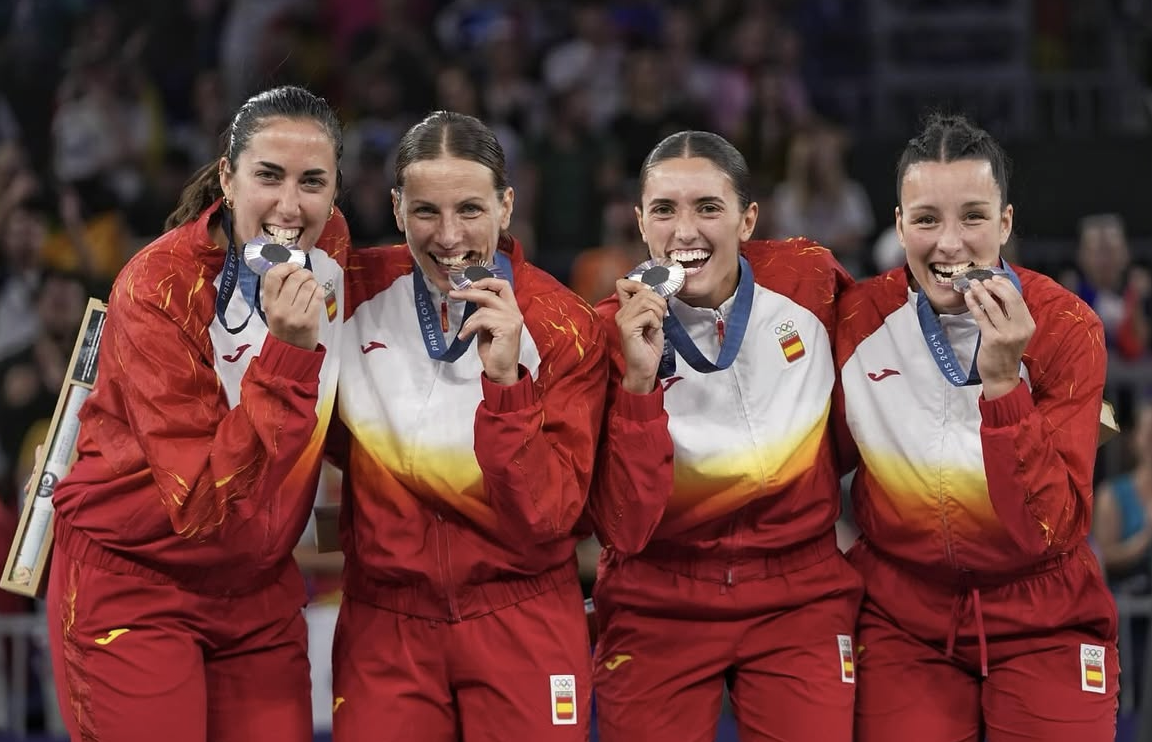
Vega Gimeno Martínez knows what it means to perform at the highest level. As a former professional basketball player and Olympic silver medallist with Spain in Paris 2024, she spent years competing under pressure, leading teams and constantly pushing the limits of performance.
Today, her career has entered a new chapter. As an entrepreneur, sports management and event professional, Director of the 3x3 department at the Spanish Basketball Federation, advisor to 3x3 basketball events and advocate for women in sport, Vega is now focused on creating opportunities beyond the court.
In this conversation, she reflects on the decision to retire, the challenge of redefining identity after professional sport, the skills athletes can carry into business and leadership, and why preparing for life beyond competition should begin long before retirement:
— Vega, how did you know it was the right moment to stop playing professionally?
I don’t think there is ever a perfect moment to retire. For me, it was more about feeling that I had given everything I had to the game.
I’ve always been an extremely competitive person—that’s part of my Spanish DNA. I knew I wanted to retire while I still felt important on the court and capable of performing at my very best. Deep down, I also knew I wouldn’t have handled staying longer if I could no longer be the player I knew I was.
I wanted to leave the game on my own terms, while I was still able to contribute at 100%.
Basketball had given me so much—friendships, experiences all over the world, and the chance to represent Spain and win an Olympic silver medal. I reached a point where I felt more excited about building something new than wondering what my next season would look like.
I wanted to leave the game while I still loved it, rather than waiting until I no longer enjoyed it.
— Was the transition from athlete to entrepreneur something you had planned in advance?
Yes, although maybe not in such a detailed way.
Throughout my career, I always believed athletes should prepare for life after sport. I studied, completed different business programs and tried to learn from people outside basketball.
When I retired, creating Her Hoops Agency felt like a natural step because it combined everything I love: basketball, helping people and building projects with a purpose.
It wasn’t starting from zero—it was building on everything I had learned during my career.
— What was the biggest challenge after finishing your sports career?
The biggest challenge wasn’t losing the competition—it was changing my identity.
As an athlete, your schedule, goals and purpose are very clear every day. Suddenly, nobody tells you what to do, and you have to create your own structure.
That freedom is exciting, but it can also be overwhelming.
I had to learn that my value wasn’t defined by my performance on the court anymore, but by the impact I could have in different ways.
— Many athletes focus entirely on performance. Looking back, what do you think is important to build outside of sport during a career?
Relationships, education and curiosity.
Your sporting career is only one chapter of your life. Build genuine relationships, not just contacts. Invest in learning things outside your sport. Be curious about business, communication, finance, marketing or whatever interests you.
Those experiences won’t distract you from performing—they’ll actually make you a more complete person.
And one day, when sport finishes, you’ll be incredibly grateful that you invested in yourself beyond the game.
— How did basketball shape the way you approach business and leadership today?
Basketball taught me that success is always a team effort. No matter how talented you are, you never win alone.
Today, I try to lead in the same way. I believe in creating trust, communicating honestly and helping people grow.
I’ve also learned that difficult moments are part of every journey. Losing games, dealing with injuries or facing setbacks taught me resilience, and that’s exactly what entrepreneurship requires.
Business is another competition, just with different rules.
— What skills from professional sport are most valuable in business environments?
Without a doubt: discipline, resilience, adaptability and teamwork.
Elite athletes learn how to perform under pressure, accept feedback, solve problems quickly and stay focused on long-term goals. Those skills are incredibly valuable in business.
Talent helps, but consistency is what creates results.
Sport teaches you to keep showing up even when things aren’t going your way.
— How important is it for athletes to think long-term while they are still competing?
I think it’s essential.
Athletes often believe retirement is far away, but careers can change overnight because of injuries or unexpected circumstances.
Thinking about the future doesn’t mean you’re less committed to your sport—it means you’re being responsible.
Preparing for life after competition actually gives you more confidence because you know your identity doesn’t end when your career does.
— What advice would you give to young athletes about preparing for life after sport?
Don’t wait until retirement to discover who you are.
Study something that genuinely interests you. Meet people outside sport. Develop new skills. Save money. Be curious.
And remember that your athletic career is something you do, not who you are.
Most importantly, enjoy your career. Sometimes we’re so focused on the next game or the next contract that we forget how special the journey really is.
— You are now working both as an entrepreneur and as Director of the 3x3 department at the Spanish Federation. How different is leadership off the court compared to leadership on the court?
There are definitely differences, but the principles are surprisingly similar.
On the court, leadership is immediate—you make decisions in seconds, inspire teammates and react under pressure.
Off the court, leadership is more strategic. It’s about creating a vision, planning for the future, listening to different perspectives and helping others succeed.
In my role at the Spanish Federation, I focus on developing the 3x3 program, coordinating logistics, analysing tournaments and rankings, and helping build the pathway towards international success.
As an entrepreneur, I have the opportunity to build projects from the ground up.
Both roles require trust, communication and the ability to bring people together around a common goal.
— What does “success” mean to you today compared to when you were an active athlete?
When I was playing, success was often measured by medals, trophies, rankings and results.
Today, success means creating something that lasts beyond me.
It means helping athletes grow, creating opportunities for women in basketball, building projects with purpose and making a positive impact on people’s lives.
Of course, I still love winning—that competitive mindset never disappears—but now I’m much more interested in the legacy I leave than in the trophies I collect.