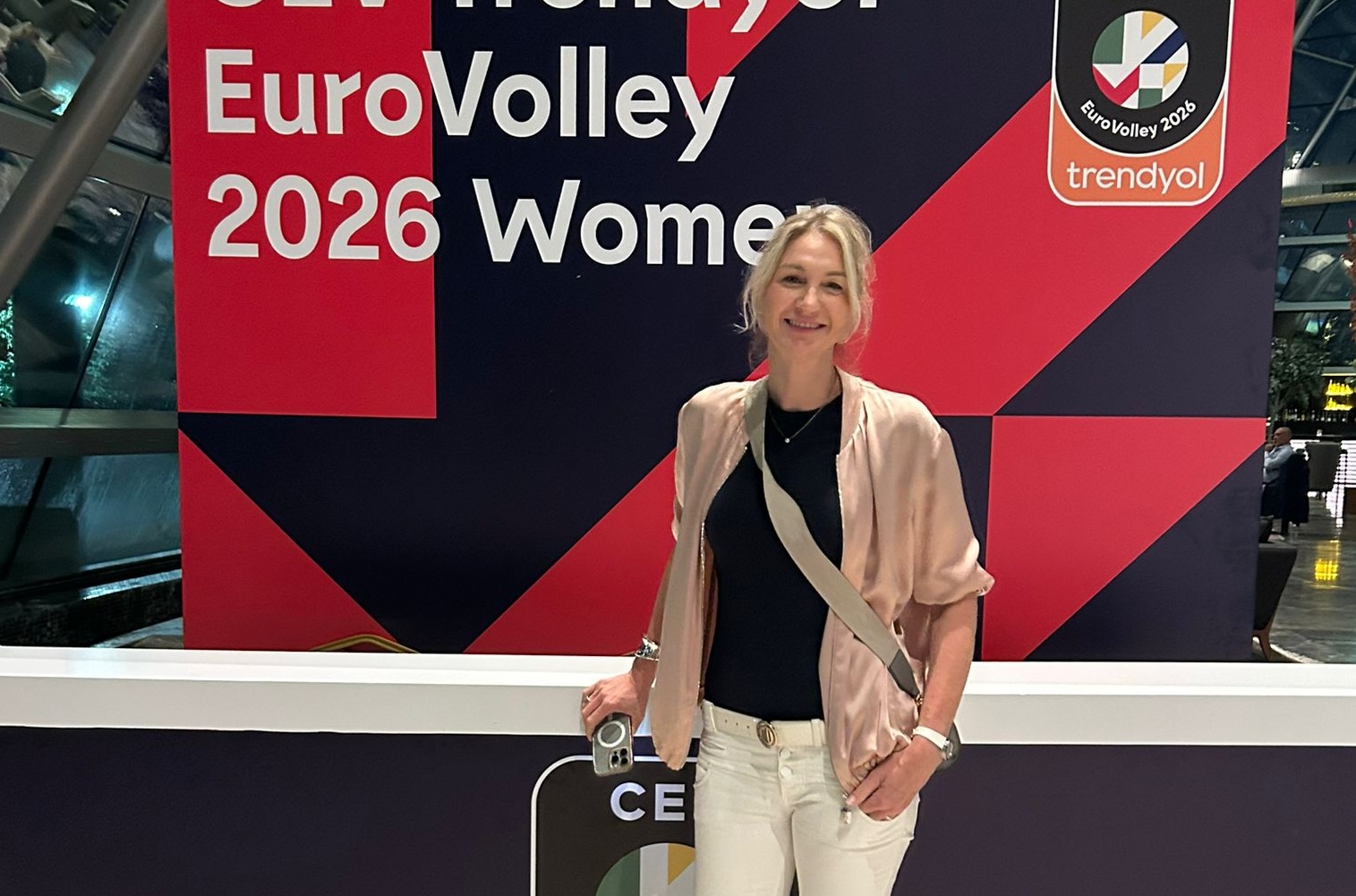
MCSC Group was in Istanbul for the EuroVolley final, and the experience offered a perspective that went well beyond the result on the court.
There is something different about experiencing a major sporting event in person. You notice the atmosphere, of course, but you also start to see everything happening around the competition: the attention from the public, the presence of brands, the media, the personalities involved and, perhaps most importantly, the way athletes themselves are perceived.
This was particularly clear during the EuroVolley final in Istanbul.
We came to watch one of the biggest moments in European volleyball, but it was difficult not to think about the much bigger story unfolding around it: the rapid rise of women’s sport and its growing importance both commercially and culturally.
As Elizaveta Bracht, Advisor at MCSC Group, observed from Istanbul:
“We are in Istanbul for the EuroVolley final — and there couldn’t be a better place to talk about the rise of women’s sport. Women’s sport is no longer an ‘emerging opportunity’. It’s becoming serious business.
The numbers support that shift. Deloitte estimates that women’s elite sport will generate around $3 billion in global revenue in 2026, driven by growing audiences, increasing media rights value and rising investment from major brands.
But being in Türkiye makes the change particularly interesting because volleyball here has become much more than a successful sport.”
When athletes become part of the culture
Women’s volleyball occupies a remarkable place in Turkish society. The leading players are not known only for what they do on the court. They have become highly visible public figures, with strong personal brands and an influence that reaches well beyond sport.
That visibility is important because it changes the way young women see what is possible for them.
Elizaveta puts it simply:
“These women are national stars — strong, successful, independent, commercially valuable and incredibly visible.”
In a society where more traditional ideas about women still exist, their success carries an additional meaning. They are not necessarily trying to make a cultural statement every time they step onto the court, but their presence does one anyway.
They compete at the highest level. They build successful careers. They become financially independent. They lead teams and represent major brands. And millions of young girls are watching them do it.
“They win. They earn. They lead. And millions of girls see them doing it.”
That is one of the reasons the growth of women’s sport deserves to be looked at as more than a sponsorship or investment story. Its influence is extending into society itself.
A growing business ecosystem
The commercial potential is becoming increasingly difficult to ignore.
As audiences grow, so does the value of the ecosystem around them. Broadcasters want access to those audiences. Brands want to associate themselves with successful athletes and teams. Clubs can build stronger commercial partnerships, while athletes themselves have more opportunities to develop their profiles beyond their sporting performance.
This also means that the professional demands placed on athletes are changing.
A successful athlete may now have to think about much more than training and competition. There are sponsorship opportunities to evaluate, personal brands to develop, international relationships to manage and financial decisions that can have consequences long after a sporting career comes to an end.
The same applies to clubs, executives and other professionals operating within the sports ecosystem. As the industry becomes more international and commercially sophisticated, navigating it requires access to the right people and the right expertise.
This is one of the areas where MCSC Group sees an important role for its network and advisory approach: helping clients manage the different opportunities and relationships that surround a career or a business, rather than looking at any one part of the picture in isolation.
What Istanbul made clear
The EuroVolley final was, first and foremost, a celebration of elite sport. But it also offered a useful snapshot of where women’s sport is heading.
The audience is there. The commercial interest is there. The athletes have become influential figures in their own right, and the opportunities around them are expanding.
What remains particularly interesting is how far this transformation can go.
For Elizaveta, the answer is not limited to the business side:
“That’s the real power of women’s sport. It doesn’t just change the business of sport. It can change culture.”
That may ultimately be the most important takeaway from Istanbul.
Women’s sport is becoming a serious business, but its value cannot be measured only in revenues, sponsorships or media rights. It is also creating new role models, challenging expectations and giving a new generation of girls a different picture of what leadership and success can look like.