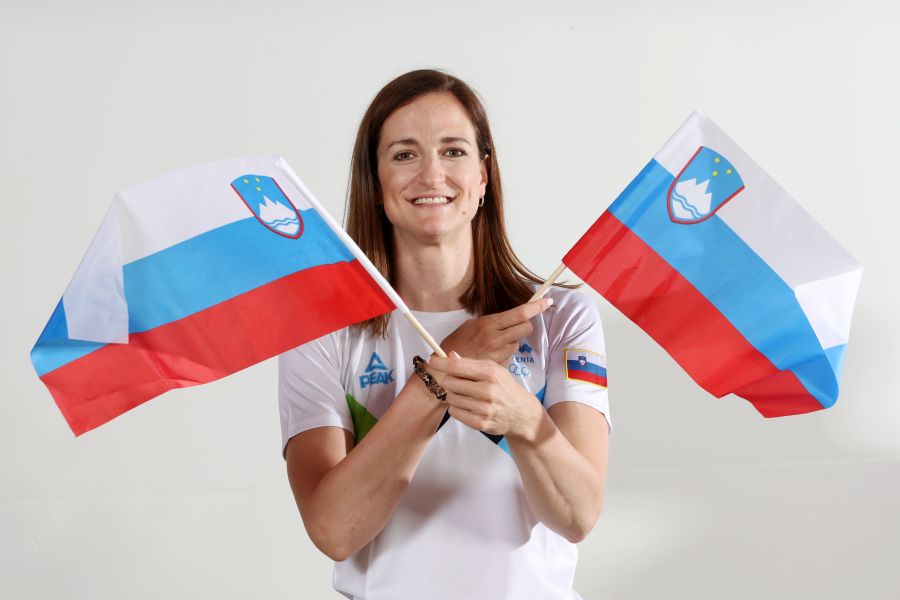
After years of competing at the highest level and representing Slovenia on the international stage, former professional handball player Ana has closed one chapter with peace of mind — and opened another as part of MCSC Group. In this conversation, she looks back at what shaped her both on and off the court: the discipline of professional sport, the moment she knew it was time to stop, and the identity questions every athlete eventually has to face. She also speaks candidly about what athletes still lack when planning for life after competition, why women’s sport still has ground to make up, and what she now hopes to help others achieve — off the court, this time.
— Ana, you have just finished your professional handball career. Looking back at the moment when you started, did you ever imagine what this journey would become?
— I could never have imagined, even in my dreams, that I would have a career like this. I am truly grateful for everything I achieved, for all the people I met, and for the career that I had. I wouldn’t change anything — and I put an end to it with peace of mind.
— You spent many years competing at the highest level, representing Slovenia and playing internationally. What are the moments or experiences that have shaped you the most as a person, rather than simply as an athlete?
— I would say that playing abroad for so many years really strengthened me as a person. I lived alone for more than half of my life and had to deal with many difficult situations on my own, without friends and family nearby. Of course, you speak on the phone — but it’s still different when they aren’t physically there. In those moments, you have to be strong and face whatever comes, which can sometimes be very hard, but I truly believe it shapes you for life.
— Professional sport demands an enormous amount of discipline and sacrifice. What did handball teach you that you believe will stay with you for the rest of your life?
— It taught me exactly that — a lot of discipline, not only in training and sport, but in life in general: to always finish what you started, to never give up even when things go the opposite way of what you’d like, and to sacrifice a great deal in order to succeed. It’s not easy, but you do it because you have a goal in front of you that you want to achieve.
— Retirement is often described as the end of a career, but for many athletes it is really the beginning of a completely different chapter. How did you experience this transition?
— The end of my career wasn’t easy, but it was really nice — almost better than I had imagined. The transition happened quite smoothly, and I was also fortunate to get a job quickly, so I didn’t need to spend too much time thinking about what to do next or overthinking what would happen. I got busy very fast, which I think helped me a lot to focus on other things rather than have too much time to “grieve” for handball.
— Was there a particular moment when you realised it was time to stop playing professionally? And how difficult was it to make that decision?
— There actually was. I got badly injured during my last season and was out for three months. During that time, I had a lot of time to spend with my husband and family, and to see more clearly what life without handball would look like. Somehow, the decision took shape during that period — I felt my passion for handball wasn’t the same anymore, that I wasn’t missing it as much as I should have been, and that was a clear sign for me that it was time to finish. I had always told myself: when I feel handball is no longer a priority, and when I’m no longer ready to sacrifice everything for it, that’s when I’ll stop.
— Athletes spend most of their lives working towards the next match, the next season and the next goal. What happens when there is no longer a next season to prepare for?
— That’s a good question. It was definitely strange — knowing I didn’t need to prepare for the next season, that my break would be longer than ever, and that I didn’t need to go to the gym and the arena every day. But as I said, once I made that decision, I was at peace with it and genuinely excited for the next chapter — to learn new things, start a new job, and be part of something completely different. So in a way, I found myself focusing much more on the future than longing for something I already knew was over.
— —How much of your identity was connected to being a professional handball player, and what have you discovered about yourself since stepping away from the sport?
— I’d say athletes tend to define themselves largely through their sport, and sometimes we think that’s all we are. But that’s really not true. The truth is, you sacrifice everything to be the best — though of course, some athletes also build other things alongside their sport, which is great, but not everyone wants or is able to do that. So when you stop, some athletes really have to figure out who they are outside of their sport, which isn’t easy. But as long as you keep trying, stay eager to learn about yourself, try new things and step outside your comfort zone, sooner or later you realise we are so much more than just athletes — that sport teaches us resilience and discipline, among many other things we can carry into the next stage of life. Our timeline might look different from other people’s, but as they say: it’s never too late for anything. That’s something I learned about myself as well.
— During your career, you had to deal with pressure, expectations, injuries, victories and setbacks. Which of those experiences do you think will be most valuable in your next professional chapter?
— I think all of them. Every one of these things teaches you something about life in general. When you get injured, or lose a very hard game, and then have to get up the next day and do it all over again — that gives you the most for life overall. I’d say you always learn more from the difficult moments, but the victories, titles and positive experiences teach you to stay humble, and give you a feeling you want to experience again and again — and that’s when you know you need to work even harder to get there once more.
— You are now joining MCSC Group. What attracted you to the organisation and to the idea of continuing your career within an advisory environment?
— I really like the business model and concept of the company. Helping athletes during and after their careers is something very important to me, and I want to contribute and share my experience wherever I can — and, just as much, to learn from other advisors, see and understand their experiences, share knowledge, and help clients in the best possible way.
— Having experienced the sports world from the inside, what do you think athletes today need more of when it comes to planning their careers and their lives beyond sport?
— I’d say they need more guidance, especially for everything outside of their sport. As I mentioned, athletes need to focus on their performance and simply don’t have much time to think about other things. It’s much easier when you have someone helping you plan your finances, media and PR — while you focus on what matters most: your sport.
— Do you think professional athletes are sufficiently prepared for life after competition? If not, what is still missing?
— Throughout my career, I saw both sides. Some athletes prepare well in advance, staying active outside of sport, studying, and educating themselves about life after their career early on. But there are also those who are perhaps afraid to face the fact that the end is near, and don’t plan far enough ahead. I think sports organisations should place more importance on helping athletes navigate this transition, and that more companies should actively participate in providing education and potential jobs for retired athletes. There needs to be greater awareness among athletes that preparing for life after their career is essential — and I think all sports organisations should offer some form of educational programme to support them.
— You have seen professional sport evolve over the years. What changes have you noticed most, particularly in the way athletes are viewed as professionals, public figures and commercial partners?
— With the rise of social media, everything has become more visible and accessible — sport and athletes included. We now see many athletes becoming role models through their sport and their social media platforms, which I find positive, because the younger generation gets a much clearer picture of what it takes to reach the top. They have examples to follow on a daily basis. At the same time, athletes are using these platforms to build their image and earn additional income, as well as to grow their popularity. That wasn’t the case when I started playing handball. Looking back — and now having some experience working with younger generations — I can say I would have been very grateful for that kind of opportunity, and to be able to interact with some of the best athletes. At the same time, because of social media and the popularity of certain figures, society sometimes forgets that popular athletes are just normal people too — not some kind of extraordinary beings — and because of this idealised image, reality can sometimes be perceived very differently from what it actually is.
— Women’s sport is gaining visibility and commercial value around the world. From your experience as a female professional athlete, what still needs to change — and where do you see the biggest opportunities?
— I’m happy to see women’s sport gaining visibility, but compared to men’s sport, it’s still falling quite far behind. Of course, everything starts with money — achieving even greater visibility requires greater investment. Women are so many things: many are mothers, entrepreneurs, and more, and many have deeply personal stories to tell. There needs to be a stronger emotional connection built around these personalities and their unique stories. There are also still topics that are difficult to talk about — menstrual health, pregnancy during a career, motherhood, mental health, and so on. All of these represent a real opportunity for brands and sports organisations to step in and promote women’s sport even further.
— Sport creates a very particular network of people, relationships and experiences. How important do you think this network becomes once an athlete moves into a new career?
— Very important. All of these connections can create new opportunities once an athlete’s career ends. You never know when one of them might lead to a job opportunity, a collaboration, or simply more knowledge. The experience gained through sport also helps a great deal in a new career — as I mentioned, we develop strong self-discipline, resilience and the ability to work towards a clear goal. All of this, and much more, can help athletes significantly after their careers end.
— If you could speak to yourself at 20, at the beginning of your professional career, what would you tell her about preparing for the future beyond handball?
— I would tell myself to be even more curious, to try to learn even more, because there is never enough knowledge — and not to be afraid of what’s coming, because Ana is not just a handball player.
— And finally, what does success mean to you today? Has your definition of success changed since you stopped playing?
— I’d say there are different kinds of success. I would call my career very successful if I count all the medals and titles. But I don’t think that’s the whole picture — success was also being able to overcome all kinds of obstacles, not giving up when things got hard, building lasting friendships and relationships, and above all, always staying true to myself. At the end of the day, we all have small, everyday goals — and achieving them is, I think, its own kind of success.
— You spent your career helping a team achieve results on the court. In your new role, what would you like to help athletes, entrepreneurs or other clients achieve off the court?
— I would like to make their journeys easier — to help them achieve their goals without having to figure everything out on their own. It’s on us to provide the information and tools they need to succeed, so that they can focus on what matters most: their performance.