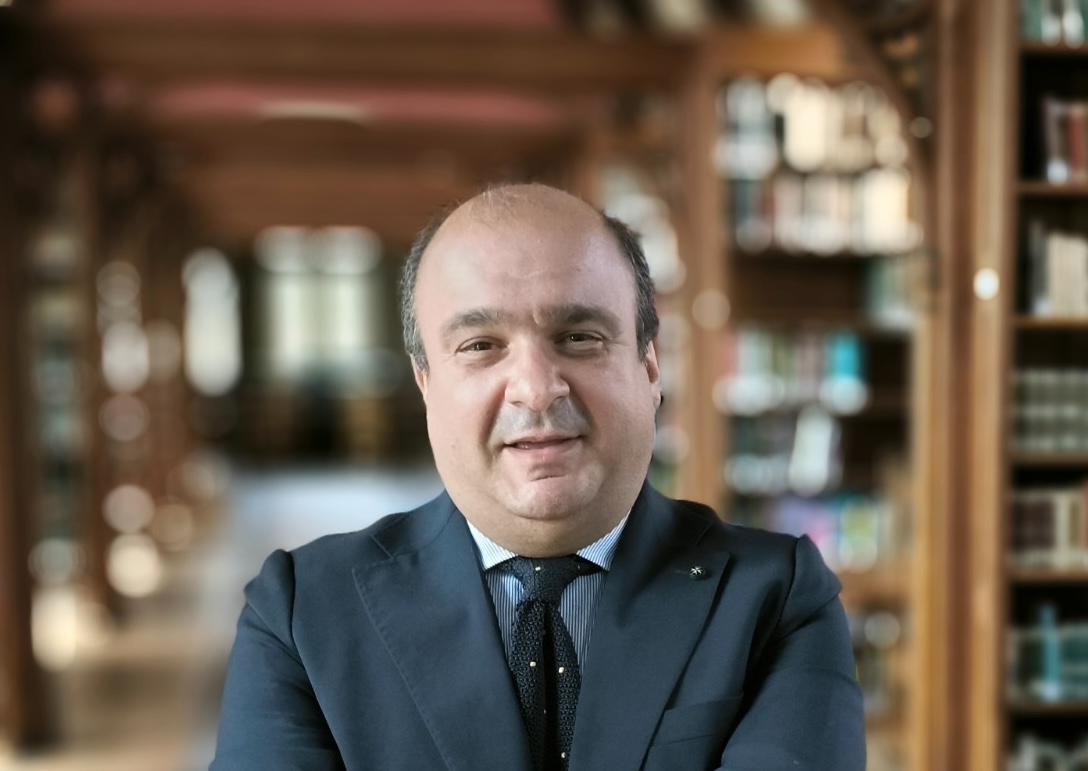
By Francesco Bongarrà, Member of the Board of Directors, MCSC Group
In an increasingly interconnected world, success is no longer determined by expertise alone. It is shaped by the ability to navigate complexity, build trust across cultures and sectors, and create meaningful relationships that stand the test of time.
When I look back at my career, what strikes me is not so much the diversity of roles, but the continuity of a certain way of approaching the world. Whether I was working as a journalist, serving in diplomacy, or engaging in cultural and institutional projects, I have always been driven by curiosity and by a genuine interest in people.
Being exposed early on to international environments helped shape a naturally cosmopolitan outlook. I learned that every context—political, cultural or economic—has its own logic, and that understanding it requires listening before acting. At the same time, I have always believed that relationships are at the core of everything. Over time, this has allowed me to build a network of trust that transcends sectors and borders, and to remain effective even in unfamiliar or challenging situations.
In my experience, trust is built quietly and over time. It is rarely the result of a single action, but rather of consistent behaviour, especially in complex or sensitive situations. Working closely with institutions and decision-makers, I have often seen that what matters most is not only competence, but judgment and discretion. People remember how you handle difficult moments—whether you can bring clarity, whether you can connect different perspectives, whether you can find solutions without escalating tensions. Influence, in that sense, is less about visibility and more about reliability. It comes from being someone others turn to when things are not straightforward.
Visibility is immediate; reputation is cumulative. Early in my career, particularly in journalism, visibility was part of the profession. But I quickly understood that being visible does not necessarily mean being trusted.
Reputation is built in the background, often in moments that are not public—through decisions taken, problems solved and relationships managed over time. It becomes especially important when one is called to deal with complex or delicate situations. In those moments, reputation is what allows you to act effectively, because it creates a presumption of trust.
Over the past decade, I have seen a significant shift. Credibility used to be largely inherited from institutions; today, it is much more closely tied to individuals, even though institutions still matter.
The acceleration of communication has made it easier to speak, but harder to be truly heard. What makes a difference now is depth—having something meaningful to say—and coherence across different contexts. In my own experience, moving between media, diplomacy and public life has required constantly balancing communication with substance. Credibility comes from demonstrating that you understand complexity and that you can navigate it responsibly.
What I find particularly interesting today is how naturally interconnected different worlds have become. Sport, business and culture are no longer separate arenas; they are part of the same ecosystem.
In such an environment, relationships are not just useful—they are essential. Throughout my career, I have invested significant time and energy in building and maintaining a wide network, particularly within the Italian political, economic and cultural landscape, but also internationally. These connections are not transactional; they are based on mutual trust and long-term engagement. They often make it possible to unlock opportunities or resolve situations that would otherwise remain blocked.
I have often seen extremely capable individuals miss opportunities not because of a lack of talent, but because of a lack of positioning. Being good at what you do is fundamental, but it is not always sufficient.
Positioning is about understanding where you can create the most value and making sure that others understand it too. In my own path, I have consciously sought roles and environments where I could operate at intersections—between countries, between sectors, between public and private spheres. That is often where the most interesting challenges are, and where innovative solutions can emerge.
Transitions have been a constant in my career, and I have come to see them not as disruptions, but as opportunities for growth. Moving between different sectors and countries forces you to rethink assumptions and to adapt quickly.
What has helped me is maintaining a strong sense of direction while remaining open to change. I would advise anyone going through transitions to invest in relationships, to remain intellectually curious, and to be willing to step into complexity rather than avoid it. Reinvention is not about starting from scratch; it is about building on what you already know and applying it in new ways.
When facing complex decisions, institutions and trusted advisors can make a crucial difference. But their value depends largely on the quality of insight they bring.
Throughout my career, I have often been involved in situations where there was no obvious solution. In those moments, what matters is the ability to analyse the problem from different angles, to anticipate consequences and to propose realistic paths forward. Trusted advisors are those who combine experience, independence of thought and a deep understanding of context. They help transform uncertainty into manageable choices.
Joining MCSC Group felt like a natural step for me because it brings together many of the dimensions I have worked across—strategy, international relations, sport and business.
What attracted me in particular is the opportunity to contribute not only experience, but also a network of relationships and a certain way of approaching complex situations. I hope to bring a perspective that is both strategic and pragmatic, rooted in a deep knowledge of the Italian landscape but open to global dynamics. I also see it as a space where innovation can be introduced in a meaningful way, especially in how organisations position themselves and build influence.
Looking ahead, I believe sustainable success will depend on the ability to remain coherent while constantly evolving. The pace of change will continue to accelerate, and those who succeed will be those who can anticipate rather than simply react.
For individuals and organisations alike, relationships will remain central, but they will need to be combined with a strong capacity for innovation and a truly international mindset. In the world of sport, as in many others, success will increasingly be defined by the ability to integrate performance, governance, communication and global positioning. Those who can connect these elements—and who can operate comfortably across different cultures and systems—will have a clear advantage.